Best AI Tools for the Czech Sales Team (2026): From Lead to Proposal
AI in sales is no longer just about generating text. For a Czech sales team in 2026, it makes sense mainly where it speeds up a specific step in the sales process: finding companies, enriching contacts, preparing for a meeting, call notes, lead prioritization, or proposal preparation. The difference between a useful tool and yet another subscription with no effect is often in the details: whether it can work with Czech, whether it has usable CRM integrations, how it handles data protection, and whether the salesperson can actually use its outputs without hours of editing.
In this overview, I cover the entire flow “from lead to proposal” and select real services that have a practical impact for a Czech team. This is not a list of all AI applications on the market, but tools that can shorten routine work, improve input accuracy, and reduce the number of manual steps. For each category, I also include the limits: who it pays off for, what exactly to do with it, and when it is better not to deploy it at all.
If you first want to get a broader overview of categories, the roundups on AIVýběr are also useful, for example AI tools or the thematic page on ChatGPT, where it makes sense to compare what a general-purpose model can handle and what already requires a specialized sales application.
1. Finding companies and contacts: Apollo.io and LinkedIn Sales Navigator

The first place where AI and automation truly save a sales team time is prospecting. In the Czech environment, “finding companies” is rarely enough. You need to know which ones make business sense, who the likely decision-maker is, and whether it is worth reaching out now or in a quarter. Apollo.io and LinkedIn Sales Navigator work best here as a combination, not as replacements for one another.
Apollo.io: database, sequences, and enrichment
Apollo.io combines a company database, contact details, sequences, and basic AI assistance for outreach. The practical advantage is that the salesperson does not have to search for contacts manually across the web, LinkedIn, and registries. They can filter by industry, company size, technology, location, or growth signals and immediately prepare a segment for outreach.
- What to do: create 3–5 ideal customer segments by company size, industry, and contact role. Then manually verify a sample of 30 contacts for each segment before launching sequences.
- Who it’s for: B2B SaaS, agencies, IT integrators, manufacturing companies with a longer sales cycle, and teams selling in both Czech and foreign markets.
- When not to use it: if you have a very narrow local market where personal relationships matter most and database contacts tend to be outdated; or if your sales rely on public tenders, where prospecting through contact databases will not generate the main pipeline.
Indicative price: depending on the plan type, it commonly starts in the lower tens of USD per user per month and goes up; exact terms vary by credits and features. For a smaller team, it is especially important to watch export and contact verification limits.
Limit for the Czech Republic: coverage of Czech contacts is nowhere near as accurate as in the US or large European markets. Apollo is therefore best used mainly as a first selection layer, not as the only source of truth.
LinkedIn Sales Navigator: signals and relevance
LinkedIn Sales Navigator is often more useful in Czech B2B for signals than for contact details themselves. It lets you track role changes, activity, company growth, and relationship mapping. This is especially important when you do not want to send generic outreach, but instead tie it to a specific change: a new sales director, team expansion, specialist hiring, or a new branch office.
- What to do: set up a list of 100 target accounts and 150–200 people in roles that typically make decisions. Track position changes and activity, and time your outreach accordingly.
- Who it’s for: account executives, consultative sales, enterprise sales, and teams dealing with multiple stakeholders within one company.
- When not to use it: if you sell to a segment where target roles are barely active on LinkedIn, typically parts of traditional manufacturing or very small local companies.
Indicative price: typically high tens to low hundreds of euros per user per month depending on the license and country. For a smaller company, it makes sense to first give licenses to two people, not the whole team.
Decision rule: if you mainly need contact volume and sequences, start with Apollo. If you need more precise timing, a relationship map, and context for outreach, start with Sales Navigator. In a mid-sized team, both often pay off: Sales Navigator for selection and Apollo for operations.
2. Data enrichment and CRM quality: Clay as a layer above tools

In many teams, the main problem is not a lack of tools, but poor CRM quality. Duplicates, missing roles, outdated emails, inconsistent company names, and zero prioritization signals. This is exactly where Clay makes sense, functioning as a working layer above multiple data sources and combining enrichment, validation, and AI variables into one workflow.
Clay is not a “simple CRM add-on.” It is powerful when you want to build a more accurate lead list from multiple sources, find company context, assign a relevance score, and send only what meets your conditions into the CRM. A typical Czech use case: a list of companies from an industry, finding their website, employee count, website technology, hiring signals, and then splitting them into A/B/C priorities.
- What to do: build an enrichment workflow for new leads from a form or export. Add domain validation, company category, size, market, and a simple relevance score. Write only leads above a defined threshold into the CRM.
- Who it’s for: outbound SDR teams, revenue operations, companies with a higher lead volume, and teams that already have a CRM but struggle with input data quality.
- When not to use it: if you have ten new leads a week and each is processed manually; the return will be low and the tool unnecessarily complex to operate.
Indicative price: Clay uses a credit model; entry-level paid plans usually start in the low hundreds of USD per month and go up depending on enrichment volume. Credit consumption needs to be monitored even more carefully than the plan price itself.
Main limitation: complexity. If you do not have someone on the team who can design, test, and continuously maintain workflows, Clay quickly turns into an expensive experiment with no impact on sales.
Practical result: instead of 500 unclear leads in the CRM, sales gets 120 companies where they know why they are relevant, who typically decides there, and what signal to use when reaching out.
3. Meeting preparation and account research: ChatGPT, Claude, and Perplexity
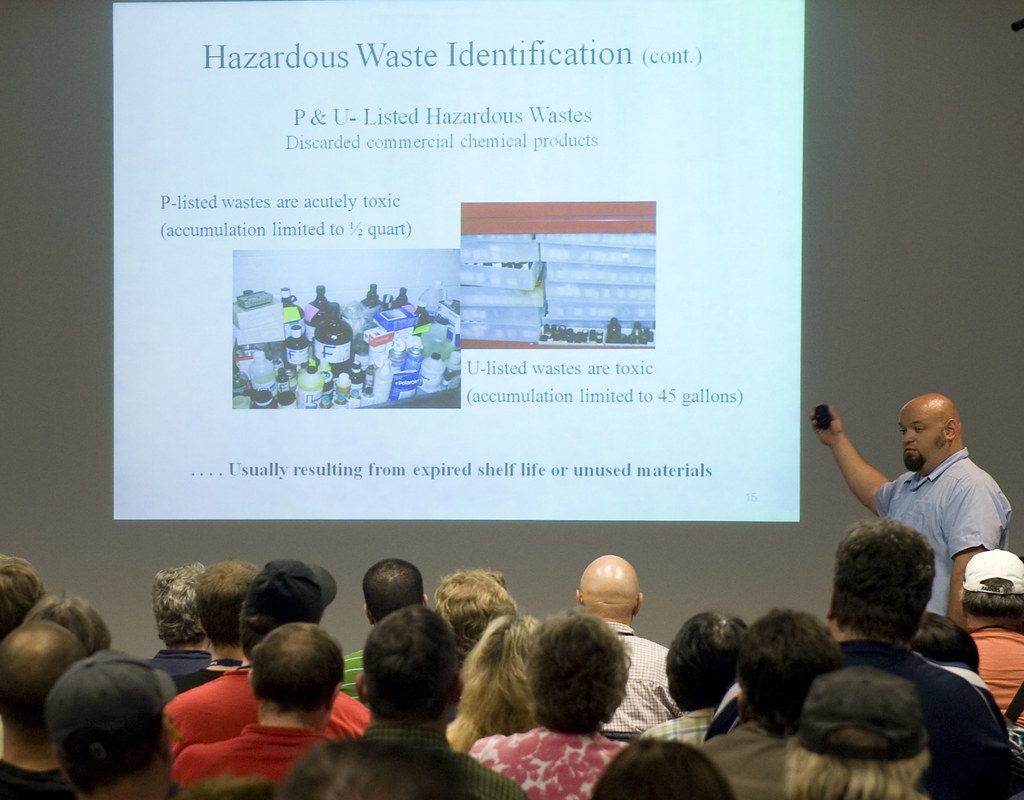
General-purpose AI models make the most sense for a sales team before a meeting and when creating supporting materials, not as fully autonomous salespeople. Three services complement each other for this step: ChatGPT for structuring outputs and working with your own materials, Claude for longer documents and more nuanced summarization, and Perplexity for quickly finding sourced information from the web.
The biggest mistake in sales is not failing to use these tools, but using them without a clear prompt. If you ask “prepare me for a meeting with company X,” you will get a mix of generic statements. If you provide the company website, ICP profile, competitors, recent communication, and the required output format, you get material that saves dozens of minutes.
- What to do: create an internal prompt template for preparing for a first meeting: company summary, problem hypotheses, 5 qualification questions, possible objections, and a suggested next step.
- Who it’s for: salespeople running discovery calls, account managers, and founders selling a more complex service.
- When not to use it: if you need legally or technically precise claims without manual review. Models can hallucinate, skip sources, or add unverified interpretations.
Indicative price: paid versions of general-purpose models typically cost around 20–30 USD per user per month, more for higher-tier business plans. The advantage is a low entry price and fast adoption.
How to divide them in practice:
- ChatGPT use for a meeting outline, converting your own notes into CRM format, and drafting a follow-up email.
- Claude use for working with longer proposals, RFPs, contract comments, or more extensive client documentation.
- Perplexity use when you need to quickly find publicly available verifiable information and want to see cited sources.
If your team is also dealing with broader model comparisons, it makes sense to follow roundups on AIVýběr, for example the page dedicated to Claude, because the differences between models in sales practice show up mainly in summary quality and handling longer context.
4. Call notes, tasks, and CRM after the meeting: Fireflies.ai, Fathom, and tl;dv

If there is one area where AI gives salespeople time back almost immediately, it is meeting processing. Manual notes are slow, inconsistent, and often end with an important objection or next step remaining only in the salesperson’s head. Tools like Fireflies.ai, Fathom, and tl;dv handle transcription, summaries, action items, and sharing key moments from calls.
The differences between them are not cosmetic. Fireflies is strong in automation and integrations, Fathom is popular for simplicity and quick post-call summaries, while tl;dv works well with clips and sharing moments across the team. For a Czech team, it is essential to test the quality of Czech transcription and especially mixed Czech-English conversations.
- What to do: choose one tool and test 20 real calls over two weeks. Measure transcription accuracy, summary quality, number of manual corrections, and the time the salesperson saves when entering notes into the CRM.
- Who it’s for: teams with more than 10 meetings per salesperson per week, managers monitoring call quality, and companies onboarding new sales hires.
- When not to use it: if you deal with highly sensitive information and do not have participant consent, internal rules, and the vendor’s data terms resolved.
Indicative price: basic paid plans for these tools are usually in the lower tens of USD per user per month; enterprise terms vary by integrations, storage, and compliance requirements.
Key limitation: a call note is not the truth, but a draft. AI is good at extracting points, questions, and tasks, but worse at distinguishing commercially critical nuances: whether the client truly confirmed a problem or merely politely acknowledged the possibility.
Practical CRM output: instead of free text, record four fixed fields: client pain point, decision process, next step, and deal risk. The transcript then serves only as a source, not as the final record.
5. Email outreach and personalization at larger scale: Lavender and Smartlead
Generative AI tempts sales teams to send hundreds of personalized emails a day. That is exactly the moment when tools stop helping and start damaging domain reputation. The right use of AI in outreach is not “write more emails,” but improve relevance, structure, and testing in campaigns that already have a reasonably selected segment.
Lavender works as an email writing assistant and gives recommendations on clarity, length, tone, or readability. Smartlead is a tool for scaling cold email, managing inboxes, warm-up, and sequences. Combining both makes sense for a team that already knows who it is writing to and needs to improve execution.
- What to do: first manually create 2–3 quality email templates for different segments. Only then use AI for subject line variants, opening lines, and shortening the text. In Smartlead, set low daily volumes and separate domains.
- Who it’s for: outbound teams with a process, SDR/BDR roles, and agencies managing outreach for multiple clients.
- When not to use it: if you do not have deliverability, technical domain setup, segmentation, and relevance rules sorted out. AI will not save bad outreach, it will only accelerate it.
Indicative price: Lavender is usually in the range of tens of USD per user per month, Smartlead starts from the lower tens of USD depending on the number of inboxes and campaign volume. But the real cost is higher because of domains, inboxes, and deliverability management.
Czech reality: in a small market, the reputation of generic cold emails deteriorates quickly. That is why lower volume but higher relevance is better. A practical rule: if you cannot explain within 15 seconds why you selected this specific company, do not send the email yet.
6. Proposals, materials, and RFP responses: PandaDoc and Qwilr
The final phase of the sales process is paradoxically the least “AI,” yet this is exactly where a lot of unnecessary work arises. Proposals are copied from old versions, the salesperson searches for the right wording, rewrites scope, and checks what has already been promised to the client. PandaDoc and Qwilr help by turning the proposal into a managed process instead of a document assembled manually from scratch.
PandaDoc is stronger in document automation, approvals, templates, e-sign, and CRM integration. Qwilr is often more suitable where you want a visually clean, web-like proposal and simpler configuration. AI features do not play the main role here by themselves; more important is the ability to reuse content, insert standardized blocks, and shorten the time from meeting to sending the proposal.
- What to do: create one main proposal template for each service type. Divide it into fixed blocks: goal, scope, timeline, responsibilities, price, assumptions, and next step. Use AI only for the first draft of the summary and personalization of the introduction.
- Who it’s for: agencies, consulting firms, software houses, B2B services, and teams sending multiple similar proposals per month.
- When not to use it: if every proposal is legally or technically unique and must be prepared from scratch by a senior consultant; automation may then hide an important difference rather than help.
Indicative price: both PandaDoc and Qwilr commonly start in the lower tens of USD per user per month, more for advanced features. ROI depends mainly on the number of proposals and the degree of standardization.
Clear rule: AI must not invent the scope of delivery in a proposal. It may speed up wording, summarize meeting notes, and insert verified blocks. Budget, commitments, and deadlines must remain under human control.
Practical scenarios: how to assemble it by sales team type
Small B2B team of 2–5 people
The best combination is often surprisingly lean: ChatGPT or Claude for preparation and follow-up, Fathom or tl;dv for meetings, and LinkedIn Sales Navigator for target accounts. Such a stack is cheaper, quick to implement, and does not overwhelm the team with workflow management.
What to do right away: introduce a unified meeting prep outline, automatic call notes, and one proposal template. These three changes often bring a bigger effect than five additional applications.
Outbound team with higher lead volume
Here, Apollo.io or Clay makes sense, along with Smartlead and a call notes tool. But discipline is critical: segmentation, deliverability control, measuring reply rate by segment, and regular CRM cleaning.
What to do right away: first limit campaigns to two segments and compare results. If they differ less than expected, the problem is not the copy, but the list selection.
Enterprise and account-based sales
Here, Sales Navigator, Perplexity or ChatGPT for research, and a quality call recorder for multiple stakeholders work best. Outreach volume is less important; account work, roles, and timing matter more.
What to do right away: for each key account, maintain a stakeholder map, sales hypothesis, and open risks. AI serves for ongoing updates, not as a replacement for account strategy.
Limits and risks: where AI harms a sales team more than it helps
The biggest risk is not technical, but process-related. When a team deploys AI on a broken sales process, it only accelerates mistakes. A poorly selected segment gets more emails, a weak discovery call gets nicer notes, and a low-quality CRM fills up faster.
- What to do: before buying a tool, write down the single metric it should improve: meeting prep time, number of valid leads, proposal sending speed, or CRM record quality.
- Who it’s for: every sales leader or revenue operations person deciding on the stack and budget.
- When not to use it: if you do not have your own data, process, or accountability for the result. In that situation, AI only creates the impression of activity.
Most common limits in Czech practice:
- weaker quality of local B2B data compared to the US,
- variable Czech transcription accuracy in call notes,
- risk of hallucinations in preparation materials and proposals,
- questions around data protection, consent, and internal rules,
- low ROI with too small a volume of sales activities.
A practical deployment rule is simple: first automate a step that repeats at least ten times a week and has a clearly measurable output. If you do not have such a step, you are not buying a solution, but an experiment.
FAQ
What is the best first AI tool for a sales team in the Czech Republic?
In most cases, a meeting note and summary tool plus one general-purpose model such as ChatGPT or Claude. Deployment is fast, the benefit is easy to measure, and no complex integration is needed.
Are database tools like Apollo.io worth it for a Czech team?
Yes, but more as a source for initial selection and enrichment than as an absolutely accurate database. For Czech contacts, you need to count on manual validation and combining it with LinkedIn or your own research.
Do AI note-takers work well in Czech?
They work reasonably well, but quality varies depending on acoustics, speakers, and language mix. Before full deployment, a pilot on real calls and an accuracy check on commercially important passages are necessary.
Can AI write sales proposals on its own?
It can create a first draft of the structure, a summary of client needs, or language shortening. But it should not determine scope, price, commitments, or legal wording on its own without human review.
How many tools make sense to introduce at once?
Usually two to three. If you deploy five at once, the team is more likely to lose track of what actually works. First solve one step in the process, and only then add another layer.
Conclusion
The best AI tools for a Czech sales team in 2026 are not the ones promising full sales automation. The tools that work best are those that speed up a specific and recurring step: selecting relevant companies, preparing for a meeting, call notes, or assembling a proposal. For a smaller team, a general-purpose model, a meeting note-taker, and one quality account source are usually enough. For outbound and revenue operations, it makes sense to add data enrichment and managed outreach.
If you take away only one rule, stick to this: every new AI application must improve one specific metric and save time in a recurring step. The moment you cannot name that in one sentence, you do not need the tool yet.
Recommended AI stack for implementation
Choose tools according to your budget and level of automation. Below is a direct overview of services for implementing the project.
| Service | Service description | Offer |
|---|---|---|
| NordVPN | VPN service for privacy protection and secure connections. | Open offer |
| Semrush | SEO and marketing platform for analysis and traffic growth. | Open offer |
| Make | Advanced visual automation for workflows and integrations. | Open offer |
| Hostinger | Web hosting and domains for fast website launch. | Open offer |
| Fiverr | Marketplace for freelancers and external specialists. | Open offer |
| Adobe | Creative tools for graphics, video, and digital content. | Open offer |
| Canva | Online design tool for graphics, presentations, and social media. | Open offer |
| Jasper | AI tool for marketing copy and content campaigns. | Open offer |
Note: We use affiliate links for listed services. If you purchase through them, we may earn a commission at no extra cost to you.
Links in the article
- OpenAI
- Claude
- Perplexity
- Make
- Apollo.io
- LinkedIn Sales Navigator
- Clay
- Fireflies.ai
- Fathom
- tl;dv
- Lavender
- Smartlead
- PandaDoc
- Qwilr
Sources of illustrative images
The original illustrative image was created using the OpenAI Images API.
Doporučení ke čtení
The Best AI Tools for Accountants in the Czech Republic 2026: Document Verification, Matching, and Audit Trail

AI for accountants in the Czech Republic: document verification, item matching, and an audit trail without chaos

AI for HR in 2026: candidate screening, bias risks, and auditable decision-making